

Laser in modern Dentistry
The term LASER is an acronym for ‘Light Amplification by the Stimulated Emission of Radiation’. As its first application in dentistry by Miaman, in 1960, the laser has seen various hard and soft tissue applications.
Lasers used in dental practice can be classified by various methods: According to the lasing medium used, such as, gas laser and solid laser; according to tissue applicability, hard tissue and soft tissue lasers; according to the range of wavelength, and of course the risk associated with laser application.
We have 5 Types of Lasers that can used in Dental practice;
- Carbon Dioxide Laser
- Neodymium Yttrium Aluminum Garnet Laser
- Erbium Laser
- Diode Laser
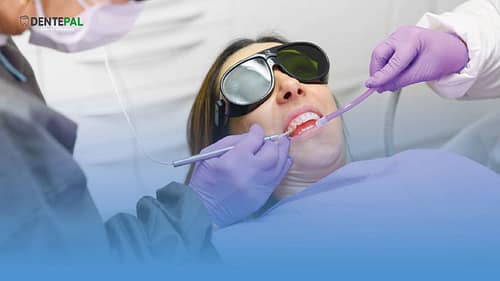
In dental lasers, the laser light is delivered from the laser to the target tissue via a fiber optic cable, hollow waveguide, or articulated arm. Focusing lenses, a cooling system, and other controls complete the system. The wavelength and other properties of the laser are determined primarily by the composition of an active medium, which can be a gas, a crystal, or a solid-state semiconductor.
Laser Application can be divided into Soft and Hard tissue applications;
SOFT Tissue:
- Wound Healing
- Post herpetic neurlagia and apthous ulcer
- Photo activated dye disinfection
- Photo dynamic therapy for malignancies
- Aesthetic gingival recontouring and crown lengthening
Hard Tisssue:
- Photochemical effects
- Laser fluorescence
- Cavity preparation, caries, and restorative removal
- Etching
- Treatment of dentinal hypersensitivity